Global Tech Power Shift: China Leads, U.S. Responds.
The Pentagon and allied forces are rapidly integrating cutting-edge technologies—including AI, directed energy weapons, and advanced space capabilities—to redefine military operations and counter emerging threats.
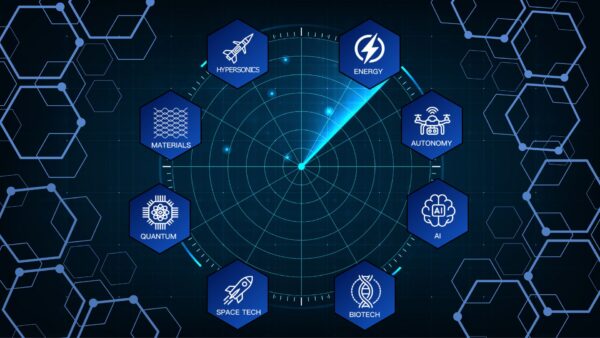
There is a race between the U.S./NATO and China in AI, space, and cyber warfare, where AI-driven decision-making, advanced surveillance, and resilient digital infrastructure will define future military superiority. Key developments include:
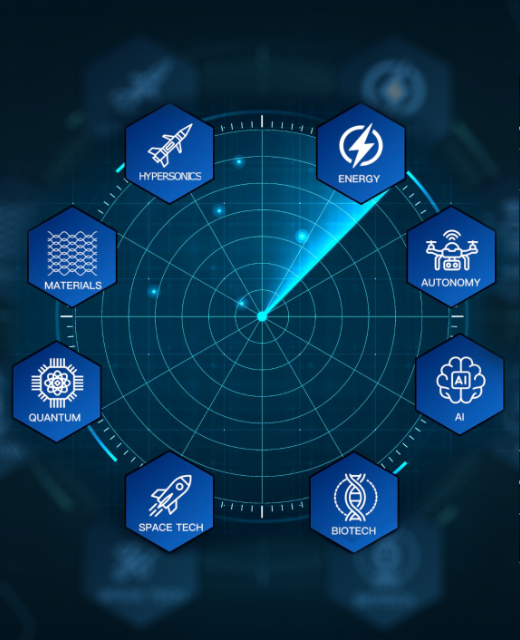
- AI – NATO countries and partners are accelerating the integration of AI into military networks, battlefield decision-making, targeting, logistics, cybersecurity, and training. At the same time, strategic competitors are also advancing military AI. Reports indicate that some Chinese AI models exhibited escalatory tendencies in simulated national-security crises, raising risks if such systems are deployed.
- Autonomy – NATO countries and partners are rapidly scaling autonomous systems across air, land, and maritime domains, with Türkiye’s development of USVs, NATO UGV experimentation in Latvia, and US efforts to expand domestic drone production. Strategic competitors, especially China, are developing integrated unmanned warfare concepts, including robotic “wolf packs,” drone swarms, and maritime “shark packs,” although these systems remain vulnerable to jamming, spoofing, cyber intrusion, and power limitations.
- Hypersonics – NATO partners such as Japan are investing in long-range strike and hypersonic capabilities, including hypersonic guided missiles and glide vehicles designed to improve deterrence and survivable strike options. Strategic competitors remain ahead in operational deployment, with Russia using the Oreshnik hypersonic ballistic missile against Ukraine and both Russia and China assessed as more advanced than the US and Europe in fielded hypersonic capabilities.
- Quantum – NATO is treating quantum technologies as a critical emerging area for future military advantage, with applications in communications, navigation, computing, and sensing, including work through ACT, STO, and CMRE on quantum-enabled navigation and sensing in GPS-denied environments. The wider quantum ecosystem is moving from experimentation towards early deployment, creating future opportunities in optimisation, intelligence analysis, materials, and cryptography, while also posing risks to current encryption.
- Space Tech – NATO countries and partners are strengthening space resilience, geospatial intelligence integration, and multinational space defence planning, including a US-led “orbital warfare” operational plan with Australia, Canada, France, Germany, New Zealand, and the UK. Strategic competitors are expanding rapidly, with China developing major satellite constellations, military surveillance systems, and space-enabled kill-chain capabilities, while Russia’s experience in Ukraine demonstrates how loss of satellite connectivity can severely disrupt C2.
- Energy – The US is advancing directed energy weapons, especially high-energy lasers and microwave systems, as a defence against drones, missiles, and saturation attacks, including shipboard lasers and operational testing at military installations.
- Materials – NATO countries and partners are exploring additive manufacturing to improve sustainment, including 3-D printing replacement parts for drone systems during multinational exercises. When it comes to rare earth materials, strategic competitors, especially China, hold significant leverage through rare-earth and critical-mineral supply chains, with restrictions on gallium and other materials affecting semiconductors, radar, electronic warfare, missile defence, and advanced weapons production.
These developments underscore a shift toward AI-driven warfare, advanced defence technologies, and a competitive space race, with implications for global security and military strategy.
Never lose the key insights — download the PDF.