Beyond Hardware: Making Creativity a NATO Capability
Scaling “Project Mercury” and “Task Force X” to bridge the creativity gap across 32 nations.
What if the next war is decided not by the implementation of new disruptive technologies but by something far less visible and harder to measure, such as human creativity?
The Human Element of Defence Innovation
Defence innovation is often discussed in terms of technology, new platforms, advanced systems, and cutting-edge software. Yet this focus can obscure a more fundamental issue. The effectiveness of any capability ultimately depends on the people who employ it. The capacity to think critically, adapt under pressure, and respond to uncertainty is not an optional skillset; it is central to operational success. At the same time, it remains one of the hardest elements to develop consistently across large organisations.
Within NATO, there is a growing recognition that innovation should not be viewed as an inherent talent limited to a small group, but as a practical skill that can be learned and shared. This perspective is particularly important in light of the Alliance’s commitment to field new capabilities in a timely manner. Achieving the required speed is not simply a matter of improving acquisition processes; it requires individuals and teams who can quickly absorb new information, test ideas, and adjust their approach as conditions change.
From Theory to Practice
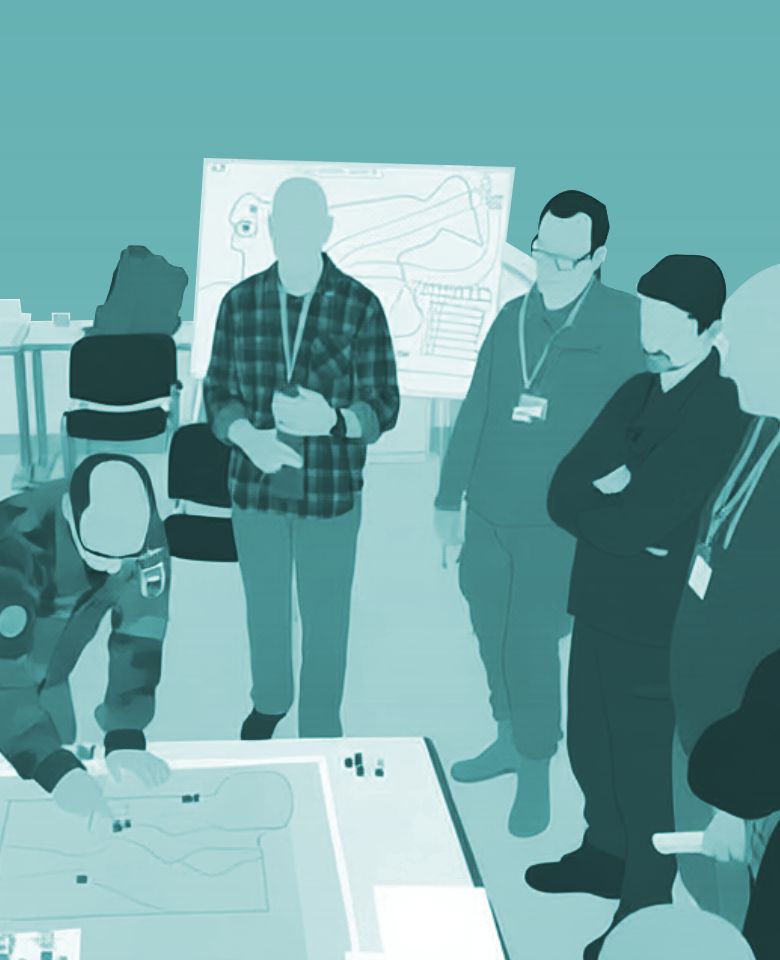
Allied Command Transformation’s Project Mercury represents one effort to address this challenge. Designed as an operator-focused initiative, it emphasises experiential learning over theory. Participants are encouraged to explore problems through rapid experimentation, challenge established assumptions, and work across organisational boundaries. The objective is to build habits that enable action in uncertain environments, rather than reliance on fixed procedures.
Insights from this work suggest that the main obstacle to innovation is rarely technical. More often, it is behavioural. In situations where personnel feel empowered to act, question, and iterate, progress tends to follow. Where individuals defer decisions, adhere rigidly to process, or avoid ambiguity, even well-supported initiatives can struggle. The issue is less about generating ideas and more about implementing them in practice.
This distinction becomes especially relevant when considering NATO’s ambition to accelerate capability delivery. While reforms to procurement and policy are necessary, they do not automatically translate into operational agility. The speed at which new capabilities are adopted depends on how effectively people can integrate them into their workflows and adapt their behaviour accordingly.
Evidence from the Field
Task Force X provides a useful illustration. In a complex, fast-moving environment, multinational teams were required to respond to evolving requirements, manage setbacks, and coordinate across multiple actors. The technical dimension was significant but not decisive. Outcomes were shaped by how quickly teams could reassess situations, make informed decisions with incomplete data, and adjust their plans. In this context, adaptability and judgement proved more critical than any single technological solution.
At the same time, these efforts highlight an important limitation. High levels of adaptability are currently concentrated among a relatively small number of individuals. Expanding this capability across the wider workforce remains a key challenge. Without broader distribution of these skills, the ability to consistently operate at pace will be constrained.
Bridging the Creativity Gap at Scale
Closing this gap requires a deliberate focus on the human dimension of capability development. Initiatives such as Project Mercury indicate that these skills can be cultivated through structured practice. By exposing personnel to uncertainty in controlled settings, encouraging experimentation, and reinforcing learning through experience, organisations can begin to build the behaviours needed for rapid adaptation.
However, institutional barriers should not be underestimated. Large organisations are typically optimised for reliability and efficiency, which can discourage experimentation and risk-taking. Creating space for new ways of thinking requires not only new programmes, but also sustained leadership support and a willingness to accept a degree of uncertainty.
Looking ahead, the ability to generate and apply ideas quickly is likely to become an increasingly important determinant of success. Technological advancement will continue, but its value will depend on how effectively it is integrated and employed. In this sense, creativity is not separate from capability; it is a core component of it.
To explore this topic further, the original article is available on War on the Rocks: The Most Important Deterrent That NATO Needs Is Creativity